
We’ve all experienced the inconvenience of cheap packaging tape: scratching your fingernails on the hunt for a seemingly non-existent edge, finally catching it, only to be betrayed by a thin strand that tears away from the rest of the roll.
This is stressful enough if you’re moving house or shipping cardboard cartons from home. However, for a busy dispatch team handling thousands of orders a day, tape that keeps splitting mid-seal can become a bottleneck that wastes material and eats away at dispatch times.
In this guide, we’ll explore why your packaging tape splits and how to find a tape that will save you hours of frustration (and potentially a lot of money, too).
Key Takeaways
- When your packaging tape splits, it’s often caused by weak film. If the backing is too thin, small nicks will quickly cause long tears.
- Micron count matters more than the roll price. A thicker film gives the tape more resistance against pulling and splitting under pressure.
- Storage conditions can make weak tape worse. Heat, cold, and humidity can all impact how well a roll unwinds and bonds.
- Also consider the adhesive. Acrylic suits clear everyday sealing, whereas natural rubber is the better option for tougher packaging conditions.
Reason 1: Your Packaging Tape Was Damaged When Opened
If your packaging tape keeps tearing, the first and most obvious thing to investigate is whether the roll was nicked as it was being opened.
A box cutter is often the tool of choice for opening cartons of packaging tape, especially in industrial settings. While this can be fast and efficient, the blade can easily go too deep and score the edge of the rolls inside. That tiny cut creates a weak point in the film, which can cause it to split when someone pulls the tape tight.
Start by examining the roll. If it looks scratched or scored in the same place across multiple layers, physical damage might be causing the problem. You can test this theory by replacing the tape and seeing whether the issue disappears with a fresh roll.
If there’s no obvious damage or the same problem repeats across multiple batches of tape, the next thing to investigate is the tape’s thickness.
Reason 2: Your Packaging Tape Is Too Thin for the Application
The next thing to assess is the tape’s thickness.
Packaging tape has a plastic backing that carries the adhesive and keeps the tape intact off the roll. The thickness of that backing is measured in microns (µm). A higher micron count means a thicker backing, making the tape more resistant to pulling, tearing, and splitting.
Many manufacturers keep production costs low by creating budget packaging tapes with a backing that’s too thin for reliable use. You can spot these tapes from a mile away because they tend to fail in predictable ways.
- Is your tape overly stretchy? It has poor tensile strength. A good packaging tape should unwind smoothly while staying fairly rigid. If you can stretch the film like cling wrap, the film will tear as soon as it meets a rough carton edge or dispenser blade.
- Can you split the tape with your fingernail? It has low tear resistance. A small nick shouldn’t make the tape split into strands. If you can damage the tape with your nail, it’s unlikely to cope with regular packaging work without splitting.
- Constantly having to reapply your tape? It has low burst strength. Once boxes are sealed, carton seams naturally push up against the tape. If the tape can’t handle flap pressure without you applying 20 layers, it isn’t the right tape for the job.
Budget packaging tapes might make the roll cheaper to buy, but they’re a false economy. Any upfront savings quickly disappear through adhesive failure, wasted tape, difficulties with box closure, slower packaging, and having to apply multiple layers of tape for a strong bond.
Reason 3: Storage Conditions Have Weakened the Film
While the majority of packing tape problems come down to the tape itself, poor storage conditions can make things worse. Even a high-quality roll can become more difficult to use if it’s been left in the wrong place for too long. Here are the main issues to watch for:
- The Tin Shed Effect: Heat is the biggest enemy. If rolls get left in direct sunlight, delivery vans, tin sheds, or warehouses that aren’t temperature-controlled over summer, the adhesive and film can weaken.
- The Cold Morning Snap: Chilly winter mornings in places like Melbourne or Canberra can cause the film to stiffen and become brittle. If you then pull that cold roll quickly through a dispenser, it’s more likely to snap or split.
- Temperature Swings: Moving tape between hot, cold, and humid environments can amplify the damage. A stronger tape may be able to hold up, but a thin, low-micron product will have less tolerance to changes in its environment.
As a general rule, keep spare tape cartons in a cool, dry place away from direct sunlight. If your rolls have been sitting in cold conditions, let them come up to room temperature before you run them through a tape gun. See our guide to storing adhesive tape for more info.
Reason 4: Your Tape Gun Is Damaging the Tape
Check your tape gun’s performance. A hand-held dispenser is supposed to make your packaging faster, but if it’s set too tightly, isn’t sharp enough, or hasn’t been cleaned in a while, it can tear the tape before it reaches the carton. Here’s what to check:
- Is your tension dial too tight? Too much resistance forces the tape to stretch as it unwinds. If the film is already thin, this can be enough to cause a split. Aim for a balance that lets the roll unwind smoothly without free-spinning or dragging.
- Is the blade dull or dirty? A clean blade should cut the tape cleanly. If the teeth are blunt, bent, or caked in adhesive residue, they can drag through the film and leave ragged edges.
- Is the roll loaded properly? Sounds obvious, but a roll sitting slightly off centre can pull unevenly through the dispenser. This can make the tape unwind at an angle or tear diagonally instead of cutting cleanly.
A good tape gun won’t save you from bad tape, but it can stop you from making the problem worse. If you’ve loosened the tension, cleaned the blade, checked the roll position, and the tape keeps splitting, you can likely confirm the issue is the tape itself.
For demanding packaging work, it’s still worth assessing whether your current dispenser is fit for purpose. High-quality tape guns like the Stylus H10 are built for heavy-duty packaging applications where reliability and sturdiness matter most. Our Stylus H14 also offers a low-noise option for offices, workshops, and smaller warehouses.
Reason 5: The Adhesive Isn’t Right for the Application
Sometimes, the problem is simply that the tape adhesive isn’t suited to your packing conditions. If the adhesive can’t bond properly, it can lift, curl, or tear, especially if the carton is under or overfilled. This forces the packer to apply extra layers to keep the bond secure.
An everyday acrylic tape can be a cost-effective choice for clean, lightweight cartons. But if you’re sealing heavy-duty packages or boxes that will face more demanding conditions, you’ll likely need the more aggressive tack of a natural rubber adhesive.
Below, we’ll dive into each adhesive type in more detail and help you choose a product that will hold up to your cartons and conditions.
Choose a Packaging Tape That Won’t Run You Ragged
The best fix for splitting tape is to choose a roll that matches your job. A tape that’s fine for light cartons at home won’t necessarily cope with a busy dispatch line.
Start with the obvious. Before you buy, check the tape’s product page or data sheet to understand its thickness, width, and roll format.
- Film thickness: Many budget tapes will sit somewhere around the 20µm mark, but this is only suitable for light-duty packaging. For heavier applications, you’ll want something closer to 25µm to 28µm for better resistance against stretching and tearing without sacrificing flexibility.
- Tape width: This is measured in millimetres (mm) and tells you whether the roll will suit your dispenser or machine. Standard packaging tape is 48mm wide, which fits most hand-held tape guns. Wider rolls can give you more coverage on larger cartons, but they need to match your equipment.
- Roll format: Most tapes will advertise that they’re made for either hand or machine application. Hand rolls suit manual packing with a tape gun, whereas machine and long-length rolls are made for carton sealing equipment and higher-volume distribution lines. Choose a product that fits your application.
From there, think about the adhesive type. At Stylus Tapes, we stock thick packaging tape with acrylic, hotmelt, and natural rubber adhesive options. Each has its place depending on your carton and the demands of your packing process.
Acrylic: For Affordable Everyday Sealing
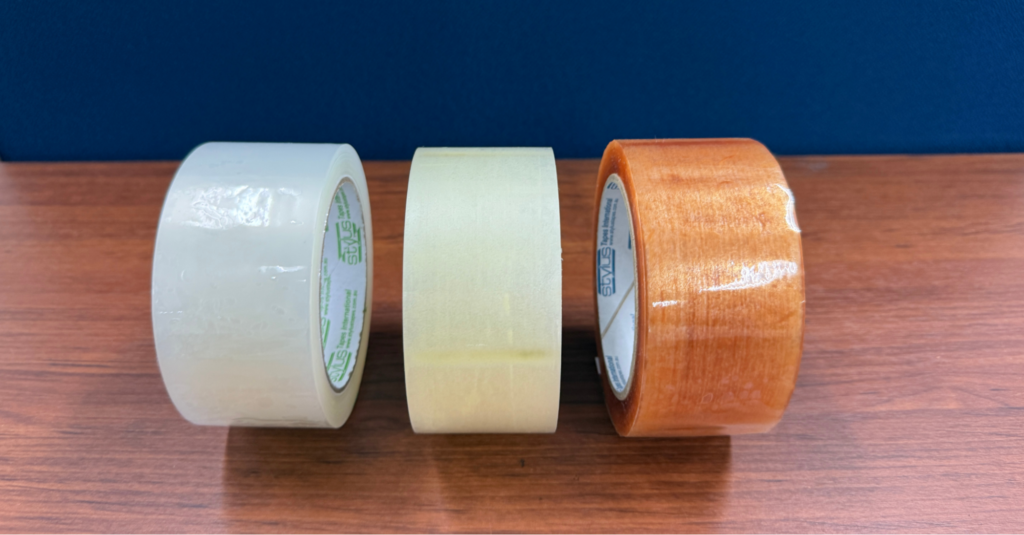
Acrylic packaging tape is a good choice when you want a crystal clear, tidy seal at an affordable price. It’s a solid option for everyday carton sealing, particularly on customer-facing packages where brown tape would impact presentation.
The acrylic tapes in our range combine a BOPP film backing with water-based acrylic adhesive, which gives them excellent ageing and UV resistance. This makes acrylic well suited to cartons that will be kept in storage or exposed to short periods outdoors. The clear backing also lets labels stay visible beneath the seal.
It’s still important to match film thickness to the job. Stylus PP99 is our top budget option with a respectable 24µm film that’s ideal for light to medium packages. If you need extra strength, Stylus PP102 has a 28µm film for medium-heavy applications. For machine packing, we also offer the 30µm Stylus PP104, designed to hold up in high-volume workflows.
Should you choose acrylic? Acrylic may not be the best fit if you’re dealing with heavy packages that need to cope with more demanding storage and transport conditions. That said, it’s a good choice if you need affordable packaging tape for everyday carton sealing.
Hotmelt: For Light to Medium Sealing Efficiency
Hotmelt packaging tape is a good mid-range option when you want an economical, resilient tape that adheres quickly without jumping straight to a heavy-duty natural rubber adhesive. Its main advantage is its strong initial tack, which helps cartons move from sealing to shipping or storage without slowing down your packing process.
Stylus PP1025 is our standout product here. It features a high-strength 25µm film with a high tack synthetic rubber adhesive, making it ideal for light to medium duty carton sealing and general warehouse use. It’s also cold-resistant and works on recycled and virgin board.
Should you choose hotmelt? Hotmelt adhesive is best for light to medium duty carton sealing when you need fast tack and good sealing efficiency. That said, if you’re dealing with particularly demanding cartons, natural rubber is a stronger option.
Natural Rubber: For the Most Demanding Packaging Jobs
Natural rubber is the strongest choice when you’re dealing with less forgiving packaging conditions. It has an aggressive initial bond, making it well suited to recycled and virgin board, dusty warehouses, and cartons that need maximum storage and transit strength.
Stylus PP30 is a great place to start. It combines a 28µm film with a high tack natural rubber adhesive, giving it powerful tensile strength and good performance in high and low temperatures. We also offer a low-noise option for busy packing environments.
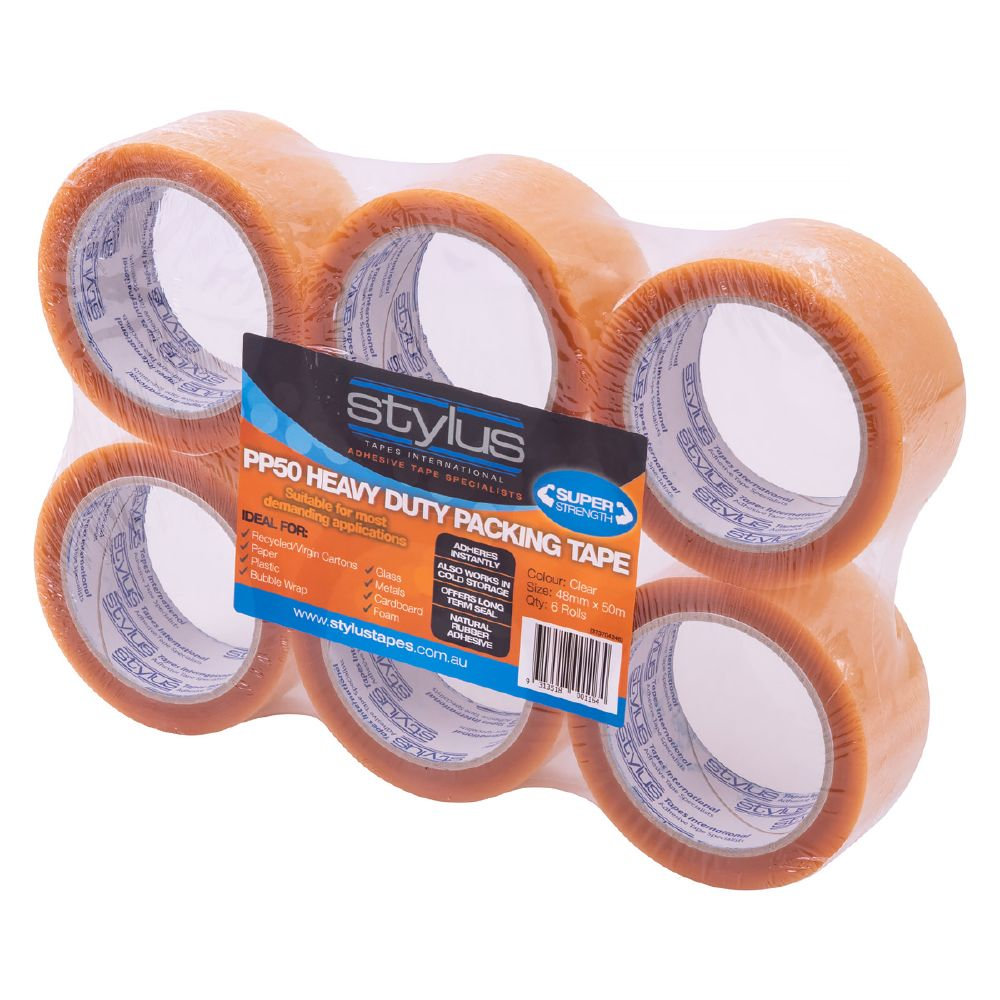
Need maximum resilience? Stylus PP50 has a 50µm BOPP film and a tensile strength of 68.4 N/cm. That extra thickness gives the tape far more resistance when it’s put under pressure. This is our number one recommendation for industrial-grade packaging applications, export shipping, extreme temperature storage, and high-moisture environments.
Choose natural rubber when: You need a heavy-duty tape for demanding cartons, cold conditions, high-moisture environments, or any job where thinner tape splits under pressure.
Stop Losing Time to Split Tape
If your packaging tape keeps splitting, don’t keep buying another budget roll in the hope the problem resolves itself. Start with the film thickness, check how the tape has been stored, rule out your dispenser, then choose a product that’s right for the job.
At Stylus Tapes, we’ve been supplying distributors, retailers, and end-users across Australia and New Zealand with high-quality wholesale adhesive tapes for more than 40 years. Our team can help you choose a tape with the right balance of strength, thickness, and cost.
If you’re interested in finding your next packaging tape, browse our full range of premium-grade acrylic, hotmelt, and natural rubber tapes, or get in touch. We’ll connect you with a trusted distributor in your area so you can find a tape that works for you.
And, if you’re a distributor, we’re always looking for new partners to join our network. Contact our expert team to discuss the right packaging tape range for your customers.
Not sure which packaging tape will hold up to your job?
FAQs
Why does my packaging tape split down the middle?
Packaging tape usually splits down the middle because the backing film is too thin or under too much tension. Once a small nick opens in the film, the tear will travel straight through the weakest point and leave you with a thin strand instead of one clean strip.
Why does my carton keep opening after I seal it?
If the centre seam keeps opening, it’s likely because the tape doesn’t have enough burst strength for the carton. This can happen when box flaps push back against the tape, especially on overfilled cartons. Likewise, a weak bond can also cause an underfilled carton to “cave in” and pull the tape away from the centre seam. A stronger tape will stay resilient even under heavy loads.
What makes one packaging tape stronger than the other?
Film thickness, adhesive type, tensile, burst, and shear strength all impact performance. The main thing to look for is a thicker backing, as this will improve tear resistance. The right adhesive matters, too, as this will help the carton stay bonded during storage and transit.
Does roll size matter when choosing packaging tape?
Of course. Roll length impacts how often packers need to stop and change rolls, which can have a significant impact in high-volume dispatch and warehouse environments. A good packaging supplier will help you match the tape format to your dispenser, machine, and daily output.