
Kraft packaging tape is a great fit when you’re sealing cardboard cartons and want a neat, paper-based finish. It bonds particularly well to virgin and recycled boards, and reinforced options give you the added strength needed for heavy-duty shipping.
The big appeal is that you can often recycle kraft tape with the box. In 2023-24, paper and paperboard had a 66% recovery rate, compared to 9% for flexible plastic, which includes standard plastic packaging tape. Switching to kraft can be a small way to support Australia’s goal for green packaging, as well as your business goals if you’re an APCO member. It also makes disposal easier for your customers.
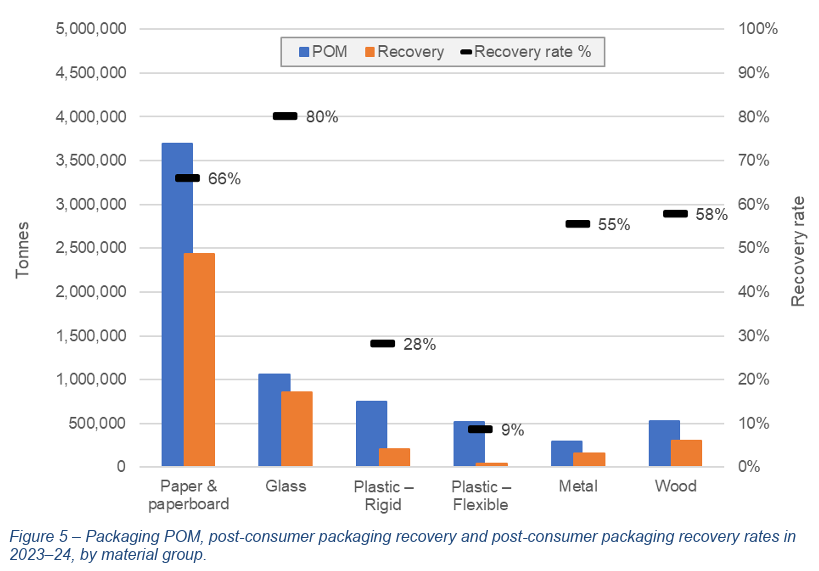
Source: APCO
That said, PVC and BOPP (Biaxially Oriented Polypropylene) tapes still have a place when you’re prioritising cost, moisture-resistance, or conformability. It all depends on your use case. In this guide, we’ll explore when kraft paper tape is the ideal option and help you choose the right product for your packing application.
Kraft vs. PVC vs. BOPP at a glance
We’ll start with the obvious: Kraft, PVC, and BOPP tapes can all seal a cardboard carton. However, each option suits a different set of priorities.
Do you want the tape to be recyclable? Will the carton carry heavy packaging loads? Could it be exposed to moisture or heat? Each of these considerations will impact your decision. Here’s a quick overview before we get into detail.
| Tape | A good fit when… | A great choice for… |
| Kraft packaging tape | You want a paper seal for cardboard cartons and are prioritising clean presentation and box recycling. | Light to heavy carton sealing (depending on the tape) in dry storage and transit conditions. |
| BOPP packaging tape | You want an economical, water-resistant clear or brown seal for fast carton sealing. | Busy packing lines where cost and moisture resistance are vital. (It’s the tape mainly used for packaging.) |
| PVC packaging tape | You need a conformable tape with smooth handling that wraps neatly around irregular surfaces. | Awkwardly shaped cartons or applications where conformability is essential. |
The right option (and specific product) will vary based on your priorities and packaging needs. In the coming sections, we’ll look at each option in more detail.
Kraft tape makes cardboard recycling less of a hassle
Normally, if you want to recycle a cardboard carton, it means painstakingly removing every sliver of plastic tape from the box. But with kraft paper tape, you generally recycle the tape and box together.
It sounds like a small detail, but consider that Australia only recovered 59% of the 6.84 million tonnes of packaging it placed on the market in 2023-24. For businesses sending thousands of cartons each day, replacing plastic tape can make life easier for customers. It also supports Australia’s wider goals for packaging recovery, and your business goals if you’re an APCO member.
For light to medium cartons, a tape like Stylus 290 is a good starting point. Its kraft paper backing uses a high-tack hotmelt adhesive that bonds excellently to virgin and recycled cardboard. You can also tear it by hand, making it ideal for busy manual packing operations.
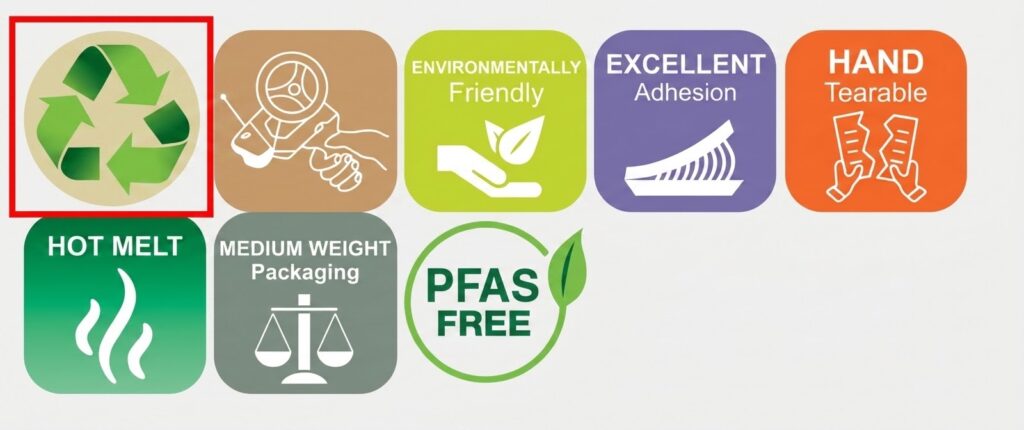
Side note: Different kraft tapes have different constructions. Fibreglass reinforcement, specialist coatings, and different adhesive combinations all impact tape recyclability. To be certain, look for a recycling certification on the product data sheet, as marked in red below.
Can kraft tape handle heavy cartons?
Yes, but only if you choose the right product. For heavier applications, you’ll want reinforced kraft tape with fibreglass strands built into the paper backing. This increases tensile strength so the tape can resist stretching or snapping under load.
It’s worth remembering that “heavy-duty” isn’t only about the weight of the carton. We recommend reinforced kraft tape as a stronger alternative if:
- The contents of the box are pushing firmly against the flaps
- Your carton is heavy or unevenly loaded
- Standard kraft tape is straining under the load
- The package is likely to come up against rough handling during transit
If you’re looking for a versatile reinforced option, Ubis 4850 Heavy Duty Reinforced Kraft Paper Tape is a top choice.
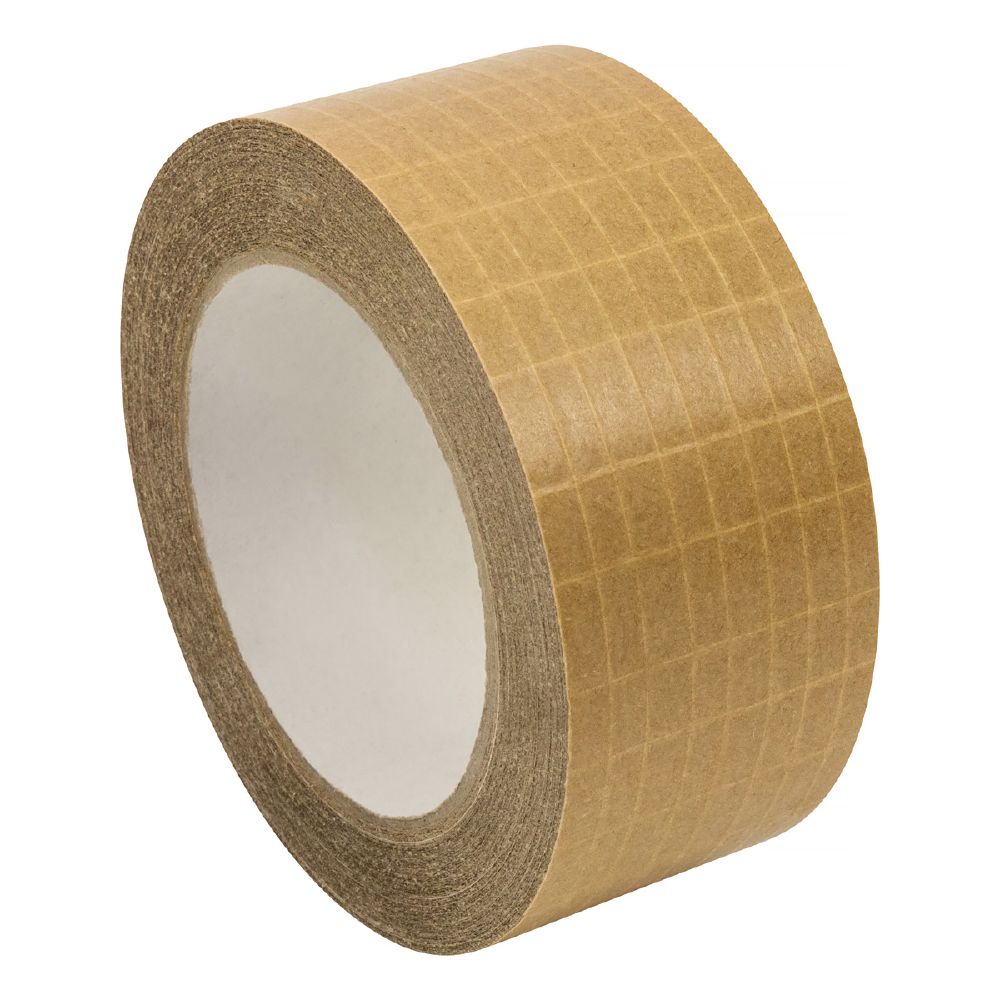
It has a 287 N/25mm tensile strength and a 240 μm thickness. Fibreglass reinforcement and high-tack synthetic rubber adhesive provide high strength and adhesion, while the 100% PEFC-certified backing makes it an eco-friendly tape alternative to PVC or BOPP options.
Kraft tape gives your cartons a cleaner finish
One of the less-discussed benefits of kraft tape is that it can make your cardboard packages look more presentable. Unlike clear and brown plastic tapes, kraft tape blends more naturally with the carton, creating a consistent paper finish. This can be particularly useful for ecommerce or retail packaging where first impressions are part of the customer experience.
Another advantage is that you can turn the seal into part of your branding. Products like Ubis 4800, reinforced Ubis 4801 and Ubis 4805 can be made to order with your logo or campaign message, giving every carton a professional finish.
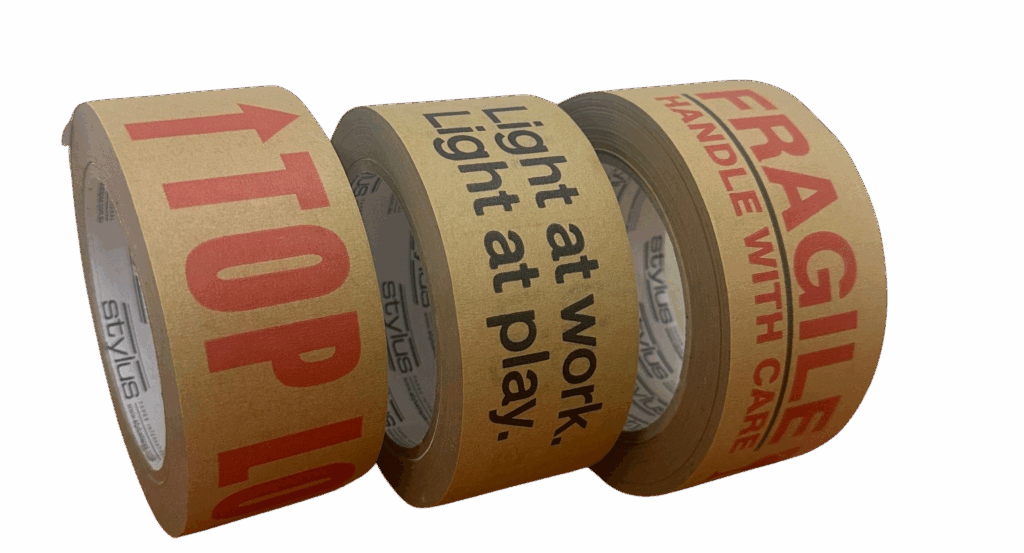
If you’re handling valuable or confidential goods, another good option is water-activated tape like Smartape 230 WAT and Smartape 240 WAT Reinforced. Once dampened, the adhesive performance means it bonds directly with cardboard fibres to create tamper-evident seals. If someone opens the carton, the seal breaks and the damage is obvious.
Distributor or packaging team? Your guide to kraft tape
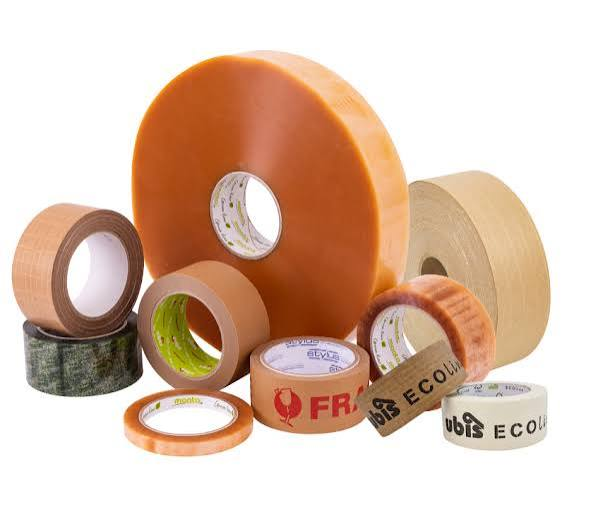
The right kraft tape depends primarily on what you’re trying to achieve. If you’re working within a packaging team, you need reliability, while a distributor needs a wide enough range to address different customer problems without risking overstocks.
As a quick recap, here are your main options:
- Stylus 290: Dependable everyday tape for light/medium cartons sealed by hand.
- Ubis 4800: Versatile hand or machine tape with custom-printed tape available.
- Ubis 4805: Light to medium tape with natural-rubber adhesive.
- Ubis 4801: Reinforced paper tape for heavy cartons and mixed loads.
- Ubis 4850: Heavy-duty tape for the most demanding cartons.
- Smartape 230 or 240 WAT: water-activated, tamper-evident sealing.
If you’re part of a packaging team
Narrow things down to two or three suitable tapes, then trial them under your normal working conditions. Assess whether one strip keeps flaps closed, whether operators find the tape easy to apply at speed, and whether the adhesive breaks under pressure.
Make sure that the trial matches the toughest conditions you regularly deal with. That could mean a heavy load, awkward shapes, or extensive moisture exposure. If you’re planning on switching tape, you need to be sure it can handle the worst-case scenario.
If you’re a distributor
For distributors, the goal is to build your kraft range so customers can understand the difference between products without needing to learn every specification.
Start with an everyday option such as Stylus 290. This is the tape you’ll see customers gravitate towards because it’s reliable and affordable. From there, you can offer a step up based on the problem they’re trying to solve. For instance, heavy-duty boxes need reinforcement from a tape like Ubis 4850.
Providing a solid recommendation is almost always going to be better than presenting the customer with a catalogue of tapes. You can also provide samples to help customers compare options. We can provide support and help you build a wholesale tape range that ticks every box.
When BOPP or PVC tape might be better for the job
Kraft tape has plenty to like, but it isn’t always the best choice. Paper tapes can be less forgiving when your packages face demanding transit and storage conditions, or exposure to moisture. It also tends to be more expensive per roll than BOPP or PVC alternatives.
Below, we’ll outline some of the cases where BOPP or PVC may still be the better option.
BOPP for affordability and moisture resistance
Biaxially oriented polypropylene (BOPP) tape is another popular option for carton sealing. It’s generally more affordable than paper tape and has a water-resistant backing, making it a strong option when your sealed cartons could encounter moisture during storage or transit.
For light and medium cartons sealed by hand, Stylus PP100 is a great general-purpose option that balances functionality with affordability. For heavier cartons and demanding conditions, Vibac PP30 combines a thicker BOPP film with natural rubber adhesive, which helps it perform well in high moisture environments.
PVC for conformability and controlled application
PVC has a softer, more conformable backing than kraft or BOPP. It bends neatly around uneven surfaces, which makes it a handy option for awkward packages where a less flexible tape might crease or lift up from the carton.
Another benefit is that it unwinds smoothly and quietly. This can make a noticeable difference in busy packing areas while also giving operators more control during manual application. As a plus, products like Stylus SP455 are printed, meaning you can add handling instructions like “Fragile” or “Urgent”.
How to choose the right packaging tape
Treat this packaging tape selection guide like a decision tree. If you answer yes to any of the questions below, you can find your ideal tape in that section. If you answer no, carry on to the next section until you land on the right product.
A quick note: For machine application, check the product comes in the roll length, width and core size your equipment requires. Most of our tapes are available in machine grades, so this rarely limits your options, but it’s worth confirming as you narrow your options.
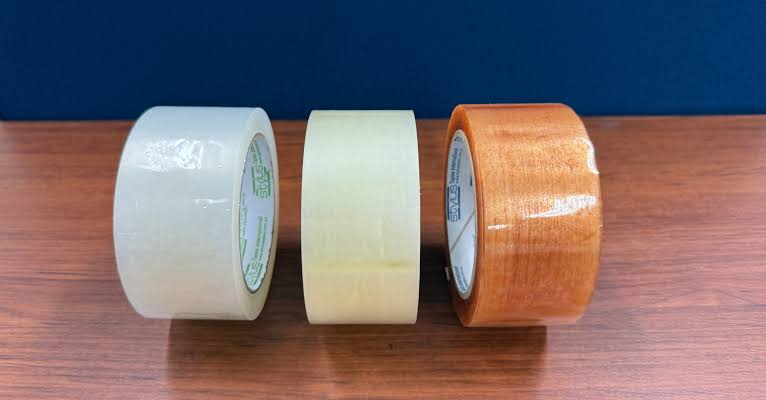
Will your cartons face excessive moisture?
Cartons that get stored in humid environments, exposed to condensation, or repeatedly handled in damp conditions need a water-resistant seal. BOPP is the strongest starting point here because its plastic backing doesn’t absorb moisture like paper.
For light-to-medium cartons sealed by hand, go for Stylus PP100. For heavier packaging or high-moisture storage, Vibac PP30 is a better choice.
If your carton remains relatively dry during storage (light rainwater is fine; prolonged damp storage isn’t), kraft and PVC are still solid options.
Does your tape need to be recycled with the carton?
If easy cardboard box disposal and a commitment to paper packaging are priorities, kraft packaging tape is the obvious choice. The carton load will determine the grade:
- Stylus 290 is a solid choice for light and medium cartons.
- Ubis 4850 is suited to particularly demanding loads.
Do you need tamper evidence?
Handling valuable or sensitive goods? Water-activated kraft tape is the ideal choice because it creates a permanent bond with the cardboard fibres.
Choose Smartape 230 WAT for medium-weight cartons or Smartape 240 WAT Reinforced when the package needs additional strength.
Is the package awkwardly shaped?
Kraft or BOPP can seal standard cartons, but uneven surfaces and irregular packages like postal tubes and damaged boxes will often need something more conformable.
PVC has a softer backing that follows the shape of the package without creasing or lifting as easily. For awkwardly shaped packages, this is likely to give you the cleanest and most controlled application.
Do you need labels or barcodes to remain visible?
Clear BOPP tape lets you seal across shipping labels and barcodes without covering the information underneath.
Again, the same Stylus BOPP products can work here. Choose Stylus PP100 for everyday light to medium cartons, or clear Vibac PP30 when you need a heavy-duty option.
Do you need the tape to carry your branding?
One of the biggest benefits of kraft tape is that it can turn your seal into part of the carton design.
Ubis 4800 and 4805 can carry custom logos or campaign messages, while Ubis 4801 has the same branded finish with added reinforcement. We also have a range of BOPP and PVC tapes that can be printed on.
Is cost the biggest priority?
For affordable carton sealing options where recycling and premium presentation aren’t essential, economy BOPP is the best way to keep cost per roll down without sacrificing strength.
In this instance, Stylus PP100 will be the best option. It’s affordable and suited to almost every light to medium use case.
Choose the tape that matches the job
Kraft packaging tape is the top choice when you want a clean paper finish and easier recycling. It’s available for hand or machine application and can be reinforced for heavier loads. You can even customise it with your own branding.
That said, BOPP may be better when cost or moisture resistance is the priority, while PVC is useful for awkward surfaces that need a more conformable tape.
At Stylus Tapes, we’ve been Australia and New Zealand’s favourite wholesale tape supplier since 1981. Our kraft tape range covers everything from everyday carton sealing to reinforced and water-activated applications, while our wider range provides dozens of reliable alternatives whether you’re prioritising strength, flexibility, or cost.
Contact our team for product advice, samples or help finding the right kraft packaging tape for your application. And if you’re a distributor, find out how joining our network can help you build a stronger packaging tape range for your customers.
FAQs
Which tape is best for recyclable cartons?
Kraft tape is the best fit for businesses working towards sustainable packaging. You can often keep kraft tape attached during cardboard box disposal, which can support plastic waste reduction while making disposal simpler for customers.
What’s the best plastic tape alternative?
Kraft products are the best polypropylene tape alternatives when you want a paper-based finish and easier recycling. They can also serve as BOPP and PVC tape alternatives for standard cartons, especially when you choose a reinforced option.
How can I make cartons visibly tamper-evident?
Water-activated tape (WAT) bonds directly with the cardboard fibres once activated with water. This creates effective package security seals because opening the box damages the tape and carton surface, making interference immediately visible.
Which tape is best for a busy packing operation?
The right product depends on the carton weight, equipment and working conditions. Hand-tearable or machine-grade tapes can speed up shipping box closure, while choosing one reliable grade for most orders can improve warehouse packing efficiency and reduce unnecessary tape changes.