
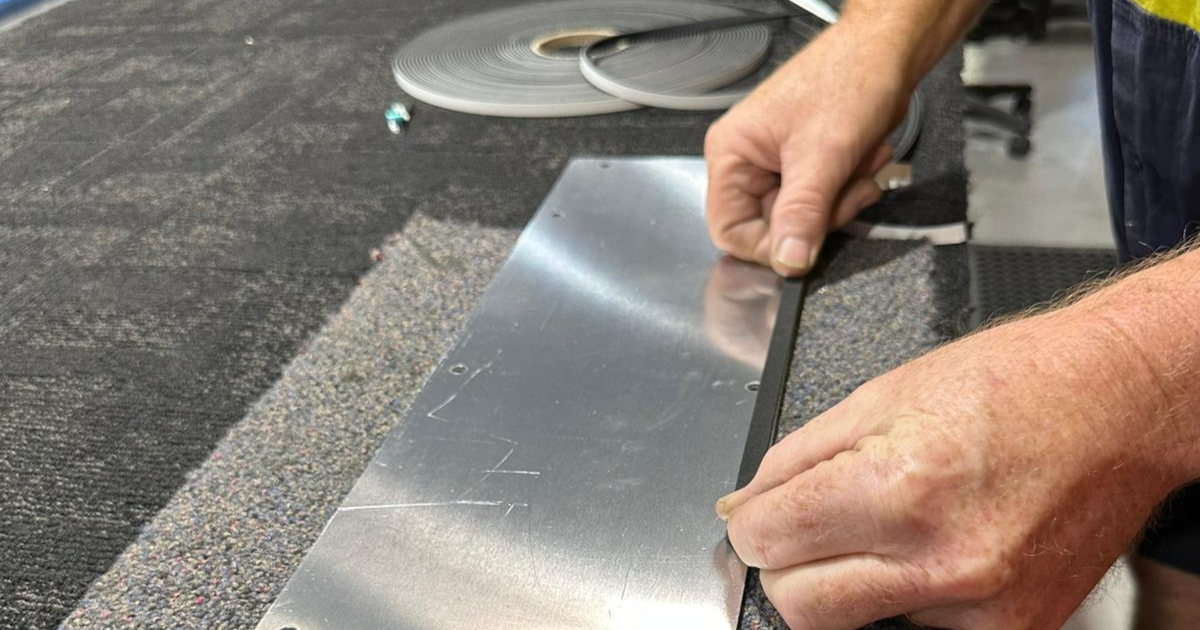
Single-sided foam tapes are the unseen workhorses of a well-built switchboard. Bonded to cabinet doors, panels, covers and gland plates, they seal out dust and moisture, absorb vibration and cushion components, and help the finished enclosure meet its Ingress Protection (IP) target. Choosing the right foam for each location is the difference between a cabinet that stays sealed for years and one that rattles, leaks, or fails a wash-down test.
Why Foam Tape Is Essential for Every Switchboard
- Seals cabinet doors and panels against dust and moisture ingress, supporting the IP rating
- Damps vibration and stops panel rattle in transit and in service
- Cushions and protects internal components and mating metal surfaces
- Closed-cell foams seal at low closure force, which is ideal for sheet-metal doors that can bow between latches and fasteners
- Self-adhesive (PSA) backing applies straight to the door return or flange
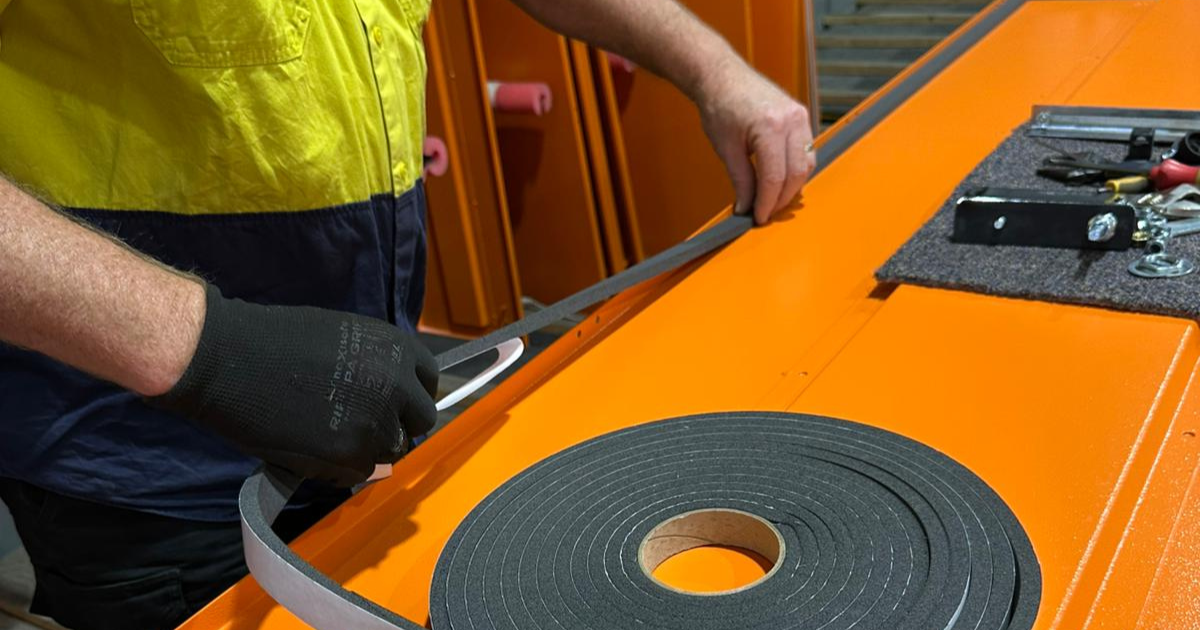
Which Single-Sided Foam Tape to Use and Where
Neoprene: The All-Rounder
Neoprene (CR) foam is specially formulated for strong resistance to oils, grease, petrochemicals and hydrocarbons, with good UV and ozone resistance and excellent compression recovery, so it springs back and keeps sealing even on cabinet doors opened and closed repeatedly. Flame-retardant grades are available and it is naturally self-extinguishing. It’s the rugged pick for switchboard sealing and cushioning, including where oils and chemicals are present.
- Best for: general cabinet door and panel perimeter seals, panel-to-panel joints, anti-rattle and cushioning pads, and the go-to where oils, grease or chemicals are present
- Excellent compression-set recovery that keeps sealing after repeated door open/close cycles
- Strong resistance to oils, grease, petrochemicals and hydrocarbons; seals reliably in oily environments
- Closed-cell structure resists moisture for reliable dust and splash sealing
- Flame-retardant (FMVSS302)
- Electrically non-conductive in general applications, but should not be relied on as primary insulation at high voltage
- Good vibration and acoustic damping
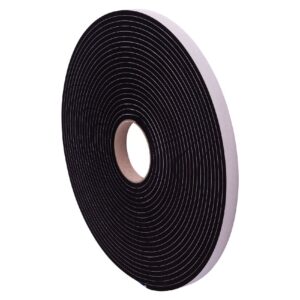
Stylus product: Kwikseal 6100 Series (black)
A closed-cell neoprene with solvent acrylic adhesive, -30°C to +130°C, flame resistance to FMVSS302 above 3mm, CFC/HCFC-free and RoHS compliant.
Thicknesses / codes: 1.6mm 6102 · 3.2mm 6103 · 4.8mm 6105 · 6.4mm 6106 · 9.5mm 6109 · 12.7mm 6112 · 19.0mm 6119
EPDM: The Weatherproofer
EPDM foam is unmatched for outdoor and wet environments: outstanding resistance to UV, ozone, weathering, water and steam, plus strong electrical insulating properties and the widest temperature range of the three. If the cabinet lives outside, or in a coastal or high-UV location, EPDM is the pick.
- Best for: outdoor and weather-exposed switchboards in pillar boxes, kiosks, rooftop, coastal and high-UV installations
- Superior UV, ozone and weathering resistance that won’t perish or crack in the sun
- Excellent water and steam sealing; strong electrical insulator
- Widest working temperature range of the three (approx. -30°C to 130°C)
- Ideal for door and hatch seals that face the elements
- Watch-out: must not be used where petroleum oils, fuels or greases are present, as hydrocarbons attack EPDM
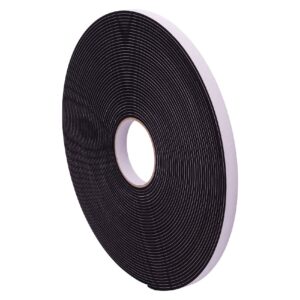
Stylus product: Kwikseal 6200 Series (black) EPDM foam
Natural rubber adhesive; slit or cut to order from 6mm to 1000mm.
Thicknesses / codes: 1.6mm 6202 · 3.2mm 6203 · 4.8mm 6205 · 6.4mm 6206 · 9.5mm 6209 · 12.7mm 6212
PVC/Nitrile: The Tough Specialist
PVC/Nitrile (vinyl nitrile) foam seals tightly against air, dust, moisture and water and conforms to uneven, irregular surfaces, with good chemical resistance and outstanding shock and vibration absorption. It’s an economical, versatile option for indoor sealing and cushioning, provided it’s kept out of prolonged direct sunlight.
- Best for: economical general sealing and cushioning on indoor cabinets, uneven or irregular surfaces, and vibration-prone component and DIN-rail mounting
- Good chemical resistance; conforms to uneven and irregular surfaces
- Strong flame resistance; conforms to FMVSS302 flammability ratings
- Top-tier shock absorption and compression recovery for high-vibration mounting and transit
- Good thermal and acoustic insulation; economical
- Watch-out: poor UV/ozone resistance — indoor or shielded use only
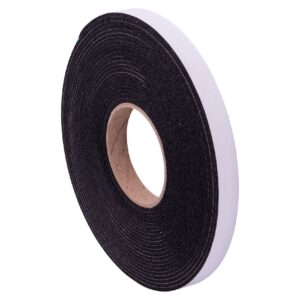
Stylus product: Kwikseal 8100 Series (black) PVC/Nitrile foam
Seals out air, dust, moisture and water; flexible over uneven surfaces.
Thicknesses / codes: 3mm 8103 · 6mm 8106 · 10mm 8109 · 13mm 8112
Where Foam Tapes Go on the Cabinet
| Location | Requirement | Foam type |
|---|---|---|
| Cabinet door perimeter | Primary dust & moisture seal, IP rating | Neoprene (indoor) or EPDM (outdoor) |
| Hinged access panels & removable covers | Good seal and rebound for repeated access | Neoprene or EPDM |
| Gland plates & cable entry points | Sealing around penetrations | EPDM or Neoprene where oil or fuel is present |
| Panel-to-panel & section joints | Dust seal and anti-rattle | Neoprene |
| Busbar chamber covers & internal barriers | Cushioning and anti-vibration | Neoprene or Nitrile |
| Viewing windows, meter & instrument bezels | Soft, low-force seal | Soft closed-cell neoprene |
| Component & DIN-rail mounting pads | Vibration damping and anti-rattle | Nitrile or Neoprene |
Rule of thumb
- EPDM for outdoor exposure
- Neoprene for oils and chemicals
- PVC/Nitrile for flexible, economical sealing
Foam Tape & Your IP Rating
Ingress Protection (IP) ratings under AS 60529 describe how well the finished enclosure keeps out solids and dust (first digit, up to 6 = dust-tight) and water (second digit) — for example, IP54 or IP65. Materials themselves aren’t “IP-rated”; the assembled cabinet is. The right foam gasket, correctly compressed, is what lets the enclosure reach and hold its target.
- Closed-cell foams seal effectively at low closure force, suited to sheet-metal doors that bow between latches
- The gasket must be properly compressed (good latching and fastener spacing) to achieve the seal
- Compression-set recovery matters on doors opened regularly — neoprene’s rebound helps hold the rating over time
- A door return or flange that shields the gasket from direct water blast improves wash-down performance
- Match foam and cabinet design to the target rating, then verify by testing the assembled enclosure
Recap: Quick Selector
| Priority / environment | Go-to foam |
|---|---|
| General indoor cabinet, all-round sealing | Neoprene |
| Outdoors: UV, rain, coastal | EPDM |
| Oil, fuel, coolant or chemicals present | Neoprene |
| Heavy vibration / impact / transit | PVC/Nitrile (or Neoprene) |
| Doors opened regularly (needs rebound) | Neoprene |
| Water & steam, no hydrocarbons | EPDM |
| Fire-safety sensitive (flame-retardant) | PVC/Nitrile or FR-grade Neoprene |
Want this guide on hand for your next switchboard build?
Not sure which foam tape suits your switchboard build?